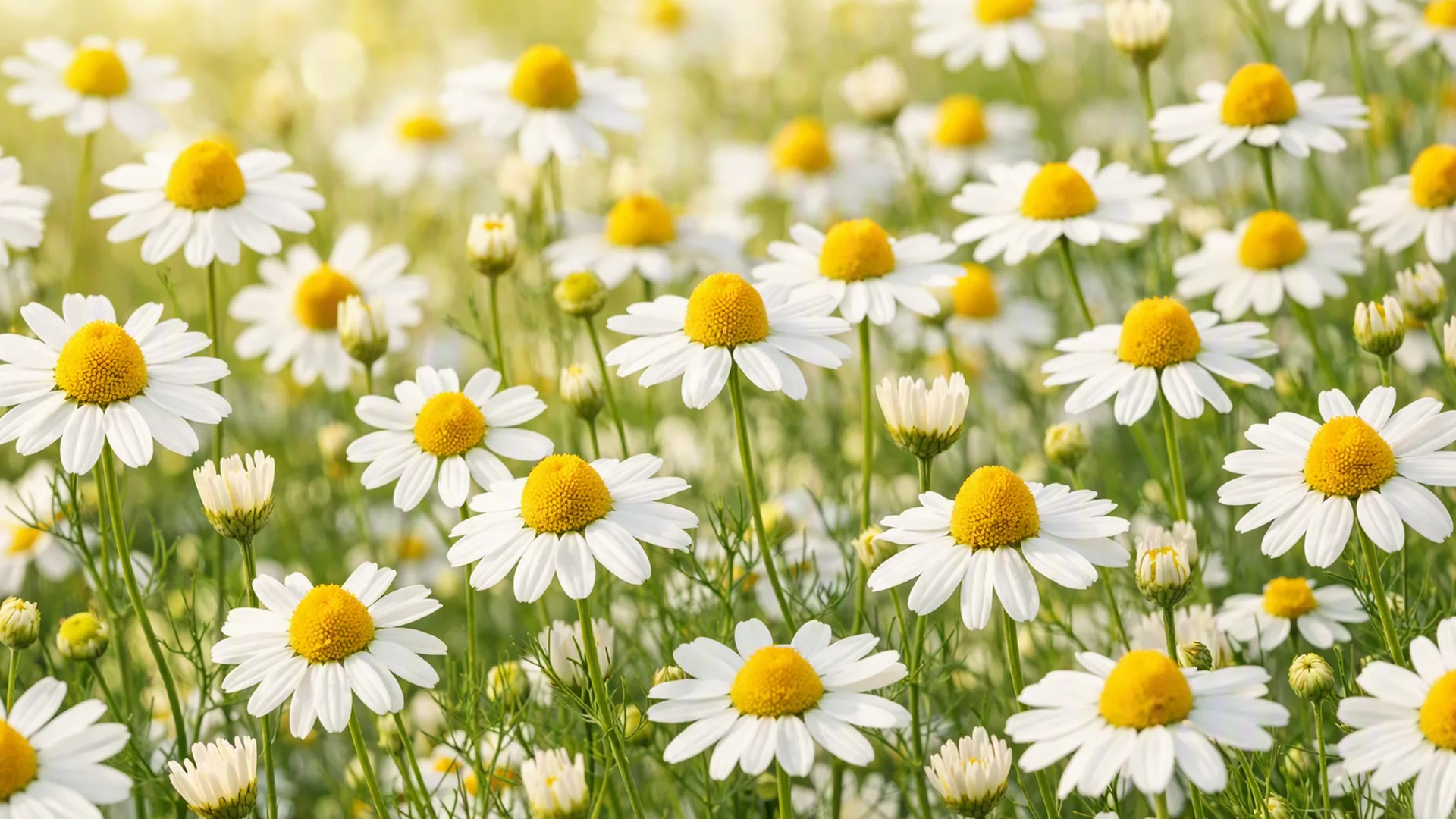

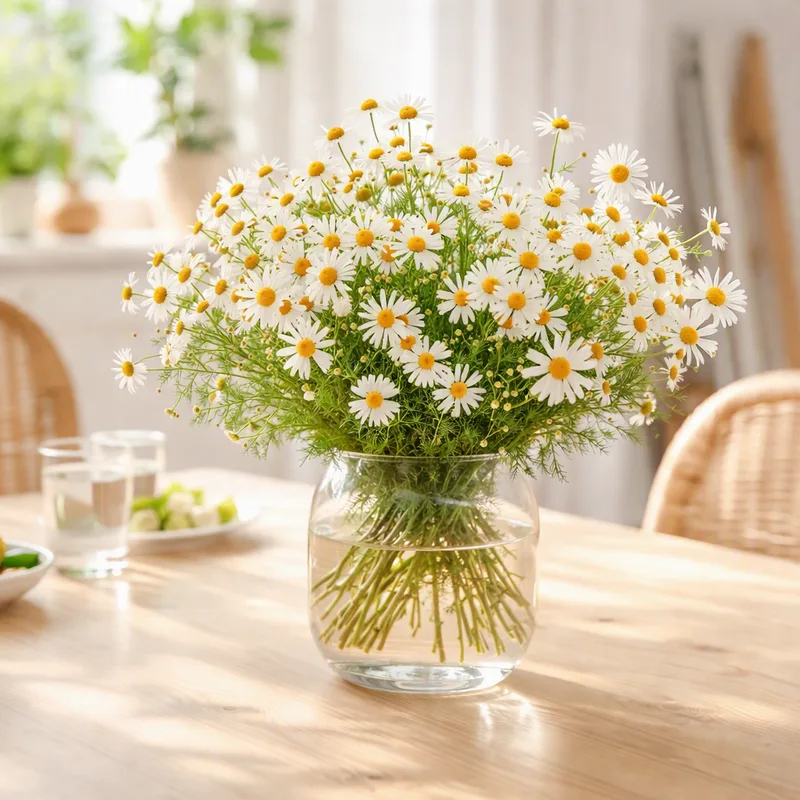


White Chamomile (Matricaria chamomilla) is one of our most beloved and well-known medicinal flowers. With its characteristic white petals and golden centres, this charming bloom spreads a pleasant, apple-like fragrance that few can resist. Chamomile has been used for thousands of years both as an ornamental plant and for its healing properties.
Easy to grow for all garden enthusiasts
White chamomile is an annual plant that is surprisingly easy to cultivate and suits both beginners and experienced gardeners perfectly. The flower thrives in most soils and climates, making it an ideal choice for Irish gardens. It typically reaches a height of 20-60 centimetres and forms bushes with finely branched stems.
Sowing and planting chamomile
Chamomile seeds are best sown directly in the planting area in spring once the risk of frost has passed. The seeds are very small and only need to be lightly covered with soil or gently pressed into the earth. Germination usually occurs within 1-2 weeks at the right temperature. For earlier blooming, you can also sow indoors 4-6 weeks before the last frost.
Optimal growing conditions
White chamomile prefers sunny to semi-shaded spots with well-drained soil. The flower is relatively drought-tolerant once established, but appreciates consistent moisture during the growing season. It thrives in soils with a pH between 6.0 and 7.5 and is not particularly fussy about nutrient content.
Flowering and harvesting
Flowering typically begins in June and continues throughout the summer until the first frost. The small, fragrant flowers develop continuously, providing a long harvesting period. For best quality, harvest the flowers in the morning once the dew has dried but before the day's heat becomes too intense.
Versatile uses in the garden
White chamomile works excellently as a border plant, in herb gardens or as part of wildflower meadows. It attracts beneficial insects such as bees and butterflies, making it valuable for the ecological balance of your garden. Many gardeners also appreciate its ability to self-seed, creating natural colonies year after year.
Traditional medicinal plant with modern charm
Beyond its beauty, white chamomile is renowned for its calming properties. The flowers can be dried and used for tea or other home remedies. The mild, apple-like fragrance also makes it popular in scent gardens and as a natural air freshener when planted near patios and windowsills.