Jasmine – Red – Guide & Ordering

Red jasmine. A fragrant potted climber that makes a warm and lasting gift.

Red Jasmine – A Plant with Charm

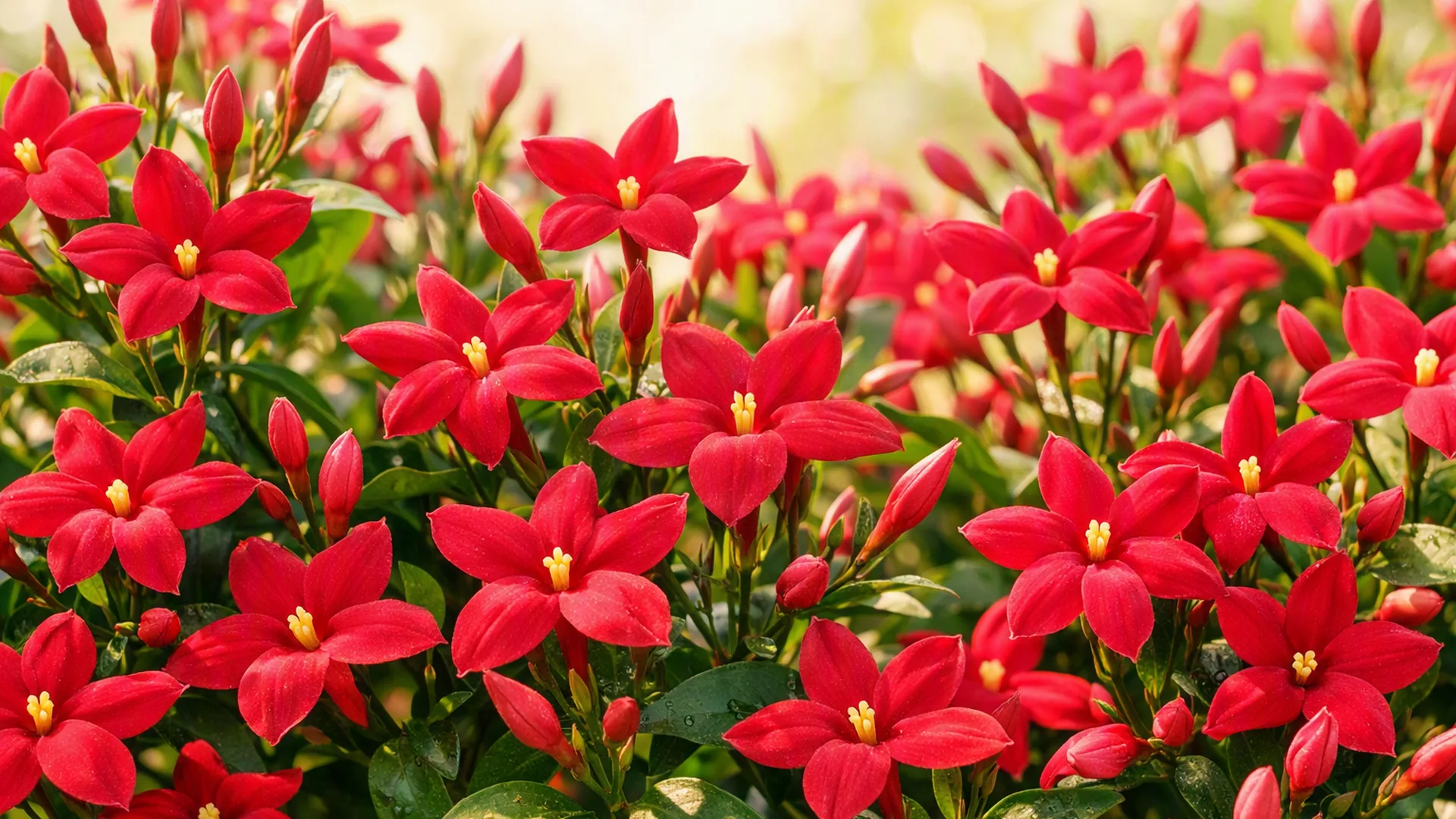
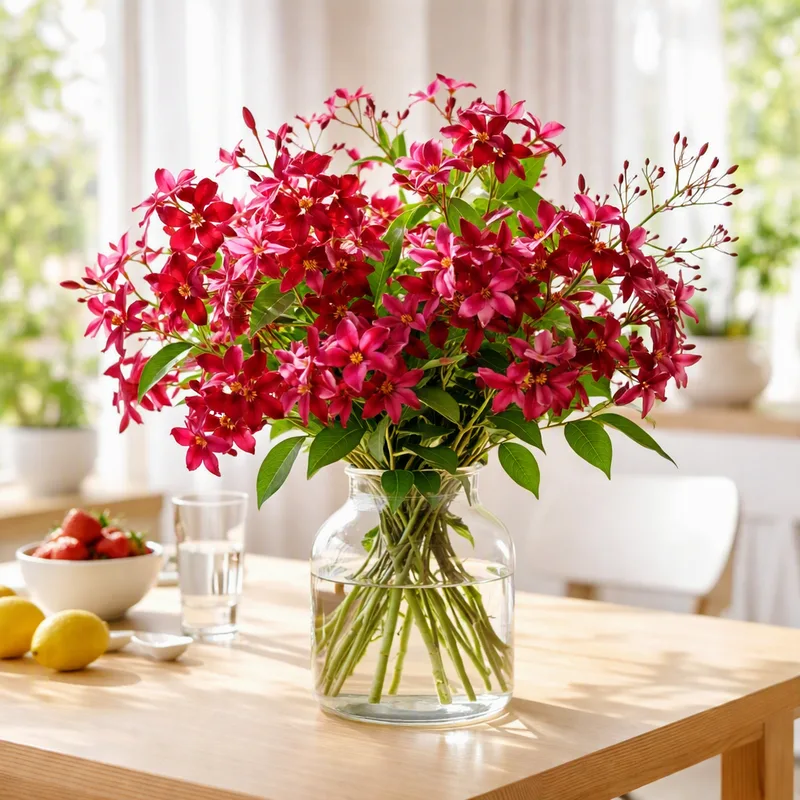
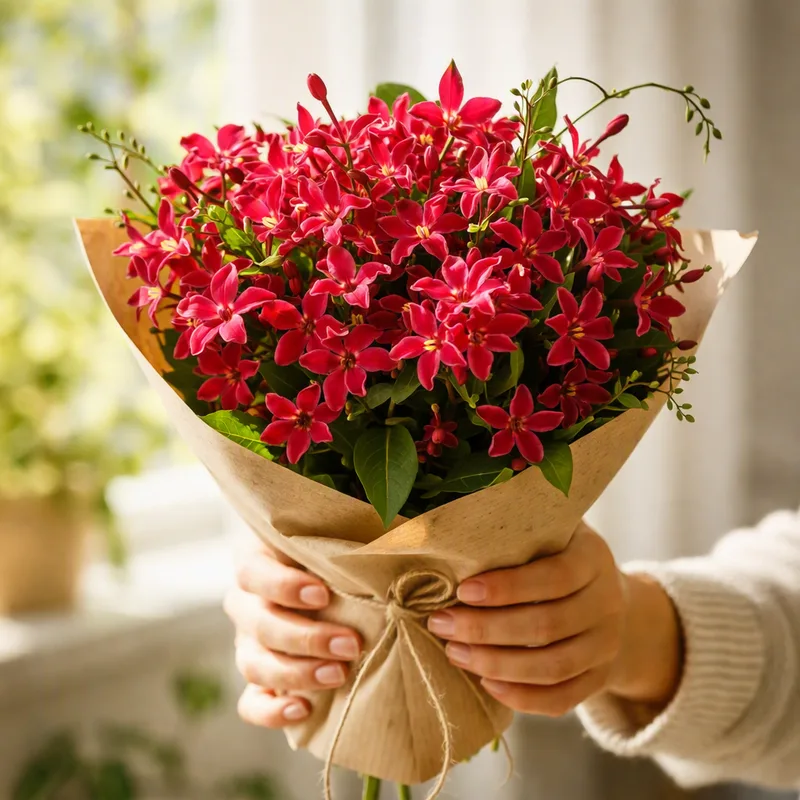
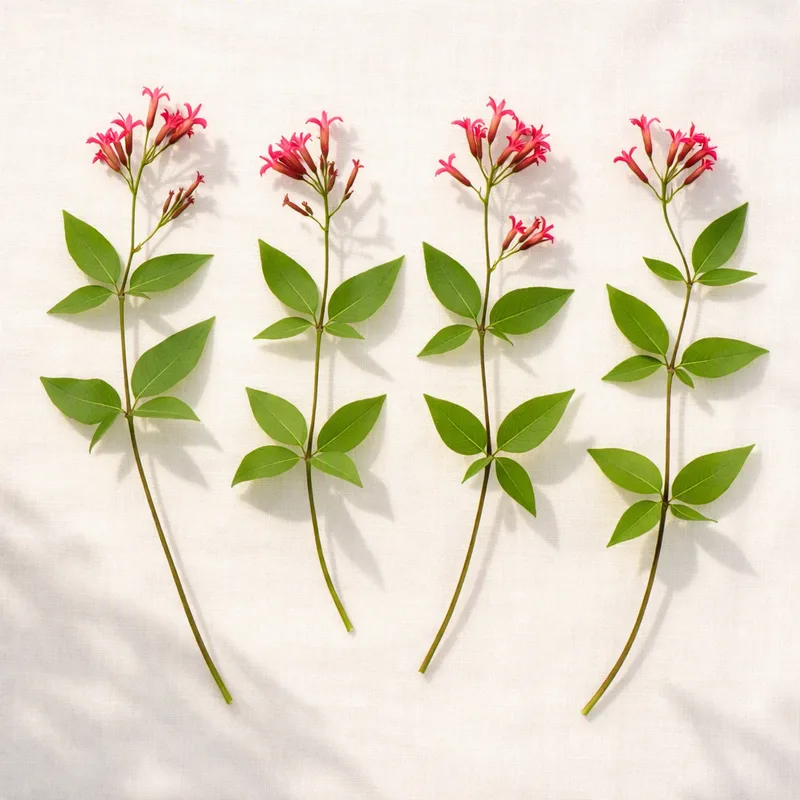
Red jasmine is a beautiful and elegant plant that for many is synonymous with loving gestures and special occasions. It takes its name from the deep pink to reddish buds, which open into small white, star-shaped flowers with a characteristic, sweet fragrance that fills the room. Red jasmine (Jasminum polyanthum) is perfect when you want to send something special without too much fuss, and as a potted climber on a hoop it looks lovely on a windowsill or side table.

Growing and Caring for Red Jasmine

Red jasmine thrives in a bright spot without harsh midday sun. Keep the soil evenly moist but not waterlogged, and feed it every couple of weeks in spring and summer. Flowering lasts several weeks from late winter into spring, and a slightly cool position helps the flowers last longer. This plant is also completely safe around your pets – jasmine is not toxic to cats and dogs, so you can have it at home without any concerns.

Height and Flowering of Red Jasmine

A potted red jasmine is typically 50-150 centimetres tall, depending on how it is trained around its support. Once flowering is over, prune it back and keep it cool and bright, at around 10-15 °C, in autumn and early winter to set new buds. In summer it can stand outside on a sheltered balcony or patio, but bring it in before the first frost. This makes red jasmine an excellent choice if you want your gift to last and bring joy year after year.

An Impressive Gift

Red jasmine is the perfect plant when you want to impress without too much effort. Whether it's a romantic gift, a thank you or simply something beautiful to make someone happy, red jasmine is perfect. Let red jasmine be your way of making someone happy – a plant that speaks for itself.

Quick facts – Jasmine – Red

Colour
red
Latin name
Jasminum polyanthum
Type
potted plant
Flowering
january-march
Light
bright indoors
Water
moderate
Height
50-150 cm
Scent
strong
Toxic to pets
no
Choose bouquet Read about delivery & times

Bouquets for every occasion • Flower guides

FAQ about Jasmine – Red

What kind of soil suits jasmine best?
Potted jasmine grows best in good-quality, free-draining potting compost with a pH of about 6.0-7.5. The pot must have drainage holes so that water does not collect around the roots. Repot after flowering into a slightly larger pot if the plant has outgrown its container.
How often should jasmine be watered?
Keep the soil evenly moist but never waterlogged, and empty the saucer after watering. During flowering and growth in spring and summer this often means watering once or twice a week, more often in a warm room. Water a little less in autumn and early winter while the plant rests in a cool spot.
When and how should jasmine be pruned?
Prune straight after flowering. First remove dead, damaged and weak shoots, then shape the plant by shortening long shoots. Taking out some of the oldest stems completely stimulates new growth and better flowering the following season.
Which pests and diseases can affect jasmine?
Aphids, red spider mite, scale insects and mealybugs are the most common pests, especially in warm, dry conditions and indoors. Check the undersides of the leaves regularly and treat early, for example with insecticidal soap.
How do I overwinter jasmine?
Jasmine is not frost-hardy, so a plant that has spent the summer outdoors must come inside before the first frost. In autumn and early winter, keep it in a bright, cool place at around 10-15 °C and water a little less. This cool period sets new flower buds, and the plant then flowers indoors from late winter into spring.

Recommended bouquets

Related flowers

🌸 Choose Bouquet