

White Magnolia - A Guide to Growing These Spectacular Flowers
White Magnolia is one of the most impressive and elegant flowers you can grow in your garden. With its large, creamy-white petals and intoxicating fragrance, this magnificent plant creates a truly spectacular display when it blooms in spring.
Characteristic Features of White Magnolia
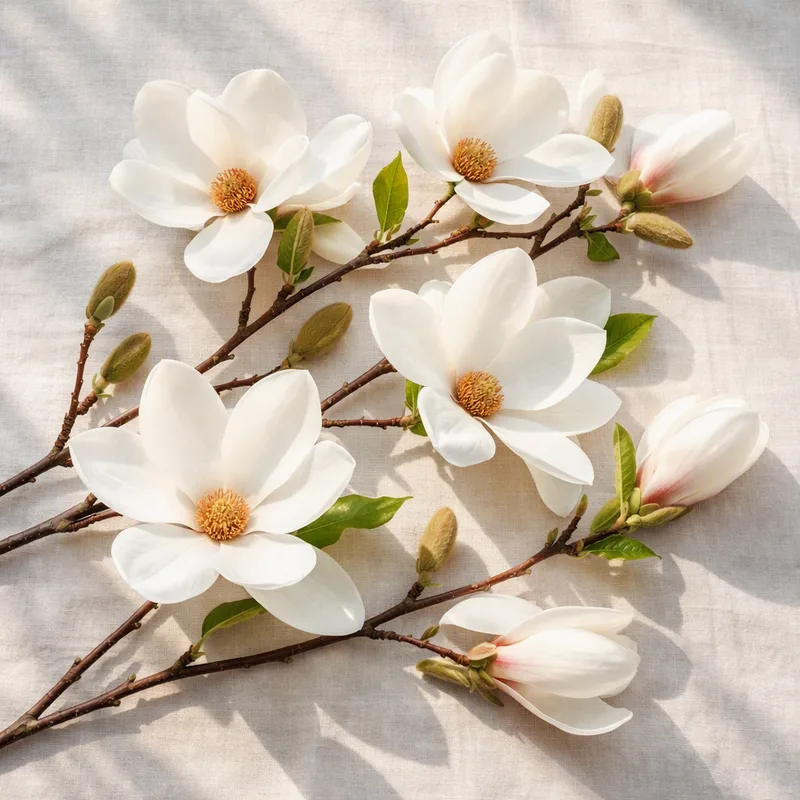
White Magnolia is characterised by its large, tulip-like flowers which can reach up to 25 centimetres in diameter. The petals are thick and waxy with a pure white colour that sometimes has a subtle pink tinge at the base. The flowers develop before the foliage appears, making the blooming even more dramatic and eye-catching.
Planting and Placement
When planting white Magnolia, it is important to choose the right location from the start, as Magnolias dislike being moved. Select a sunny to semi-shaded spot that is sheltered from strong winds. Magnolia thrives best in nutrient-rich, well-drained soil with a pH value between 6.0 and 7.0. Avoid areas where the ground becomes waterlogged for extended periods.
Watering and Feeding
White Magnolia requires regular watering, especially during dry periods and in the first years after planting. Water deeply but allow the soil to dry out slightly between waterings. A thick mulch layer around the tree helps retain moisture and protect the shallow roots.
Pruning and Shaping
Magnolias typically require very little pruning. If pruning is necessary, it should be done immediately after flowering, before new buds form. Only remove dead, damaged or crossing branches. Magnolias heal slowly after pruning, so avoid unnecessary cutting.
Winter Protection
Most white Magnolia varieties are relatively hardy, but young trees may need protection during the first winters. Cover around the base of the trunk with leaves or bark, and wrap the stem in winter fleece if very cold weather is expected. Flowers can be damaged by late frosts.
Common Problems and Solutions
White Magnolia is generally a robust plant, but can occasionally suffer from leaf spot or rot if drainage is poor. Pests such as aphids may occur, but are rarely a serious problem. Good air circulation and correct watering prevent most issues.
Varieties and Variations
There are many beautiful varieties of white Magnolia to choose from, ranging from compact shrubs to large trees. Some varieties flower earlier than others, and some have extra-large or particularly fragrant flowers. Choose a variety that suits your garden's size and climate.