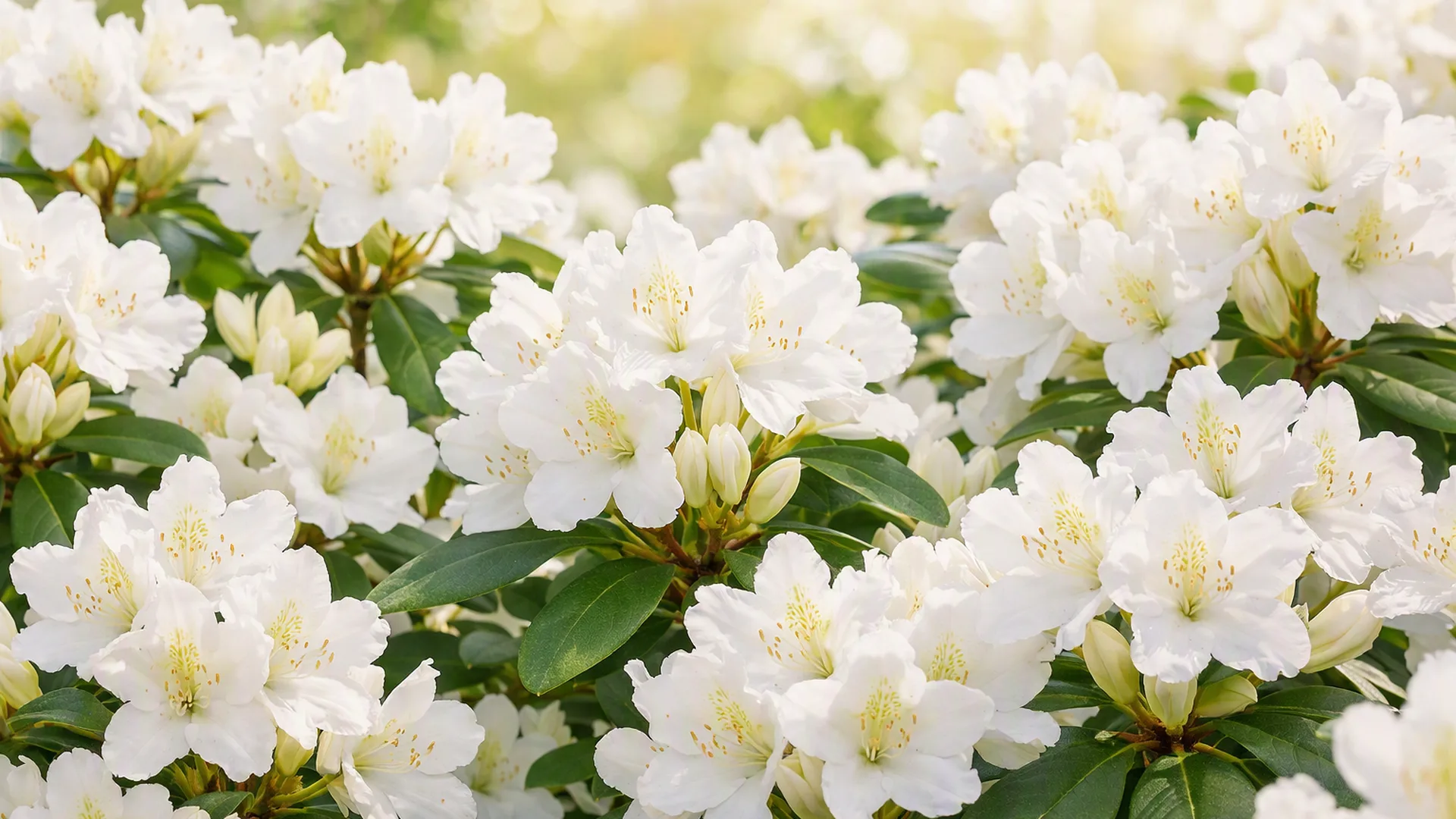

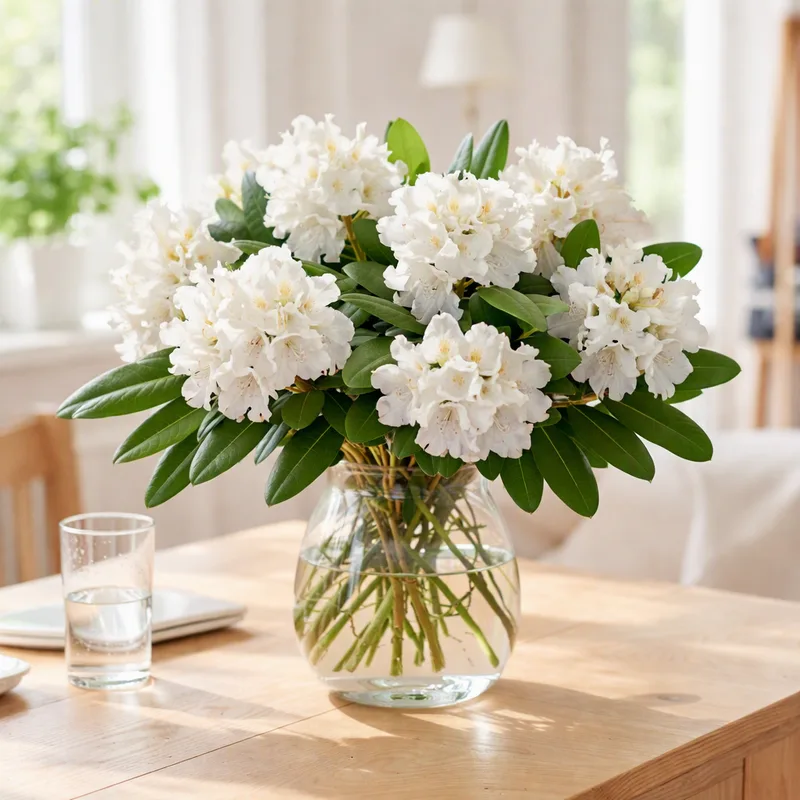
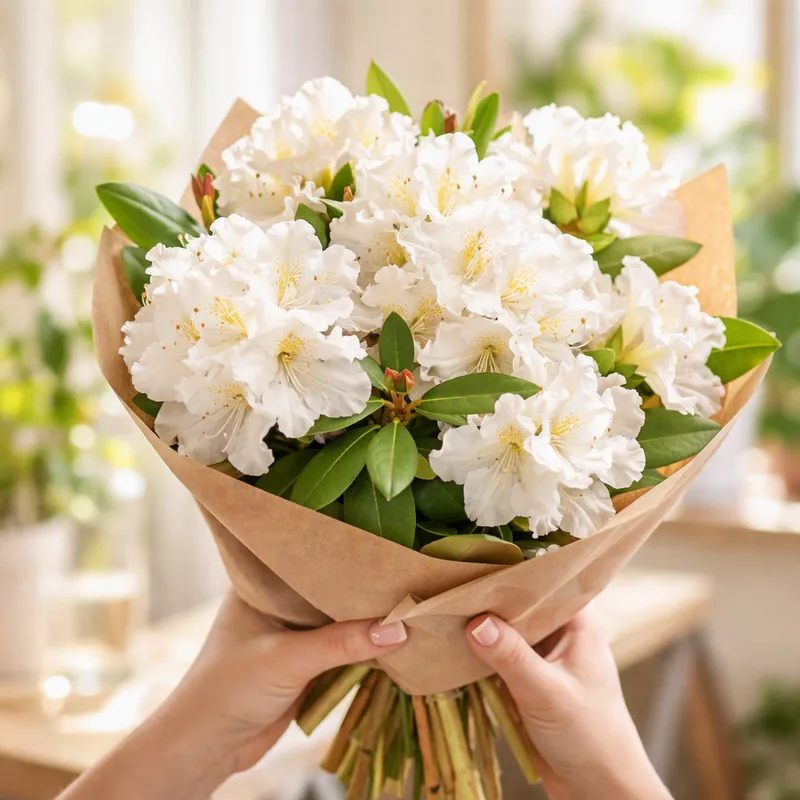
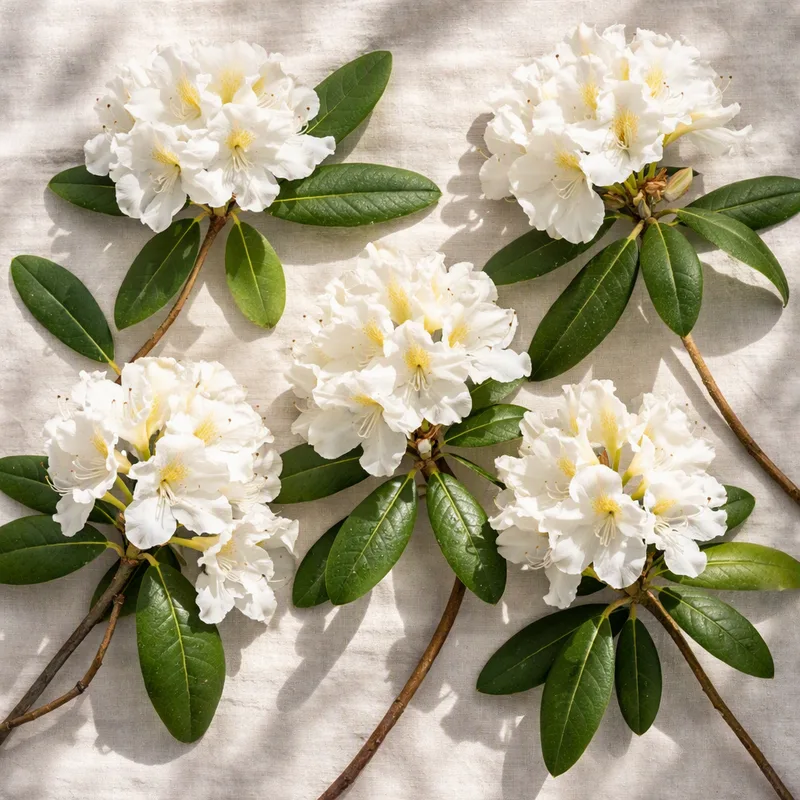
White Rhododendron is one of the most impressive ornamental shrubs you can choose for your garden. With its spectacular white flowers and glossy green foliage, this plant creates an elegant and timeless feel in any garden. Rhododendron belongs to the heather family and is renowned for its stunning flower clusters that appear in spring and early summer.
The Splendid Beauty of Bloom
The white flowers on rhododendrons are truly remarkable. Each flower is funnel-shaped and clustered densely together, with clusters containing up to twenty individual blooms. Flowering typically occurs from May to June, depending on the variety and weather conditions. The pure white petals create a striking contrast against the dark green foliage and add an elegant touch to your garden.
Planting and Soil Requirements
White rhododendrons thrive best in acidic soil with a pH value between 4.5 and 6.0. The soil should be well-draining yet moisture-retaining. A mixture of peat, compost and sand creates optimal conditions. Choose a spot with dappled shade or morning sun, as strong afternoon sun can damage both flowers and foliage.
Watering and Feeding
Regular watering is essential for your rhododendron's wellbeing. The soil should be kept evenly moist but never waterlogged. During dry periods, the shrub needs extra water, particularly when flowering. Rainwater or soft water is preferable as rhododendrons are sensitive to lime. Feeding with specialist rhododendron fertiliser or acid soil feed produces the best results.
Pruning and Shaping
Rhododendrons do not normally require regular pruning. Remove spent flowers immediately after flowering to encourage next year's blooms. If the shrub becomes too large or uneven, you can prune it gently after flowering. Avoid hard pruning as rhododendrons recover slowly from severe cutting back.
Overwintering and Protection
Most rhododendron varieties are hardy in the Irish climate, but young plants may need winter protection. Mulch the soil around the shrub with bark or leaves to protect the shallow roots. In exposed locations, you can also protect the shrub with horticultural fleece during the coldest months.
Common Problems and Solutions
Rhododendrons can be affected by various problems such as yellowing foliage, poor flowering or pest damage. Yellowing leaves are often caused by soil that is too alkaline or too much lime in the water. Poor flowering may result from insufficient light or incorrect feeding. Watch out for pests such as aphids and spider mites, particularly during warm spells.