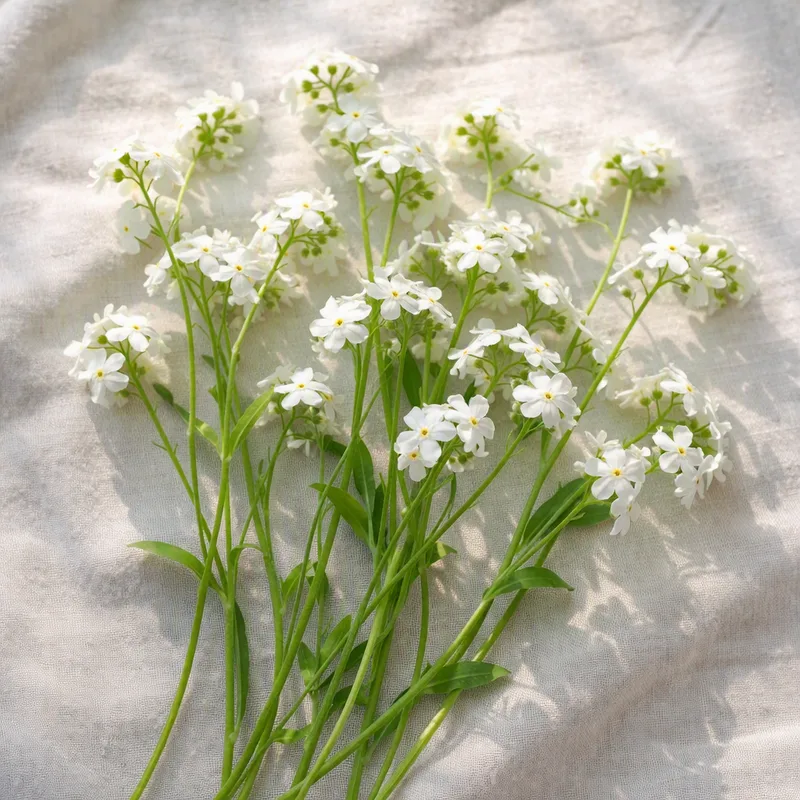
Forget-me-not White: A Charming Garden Treasure
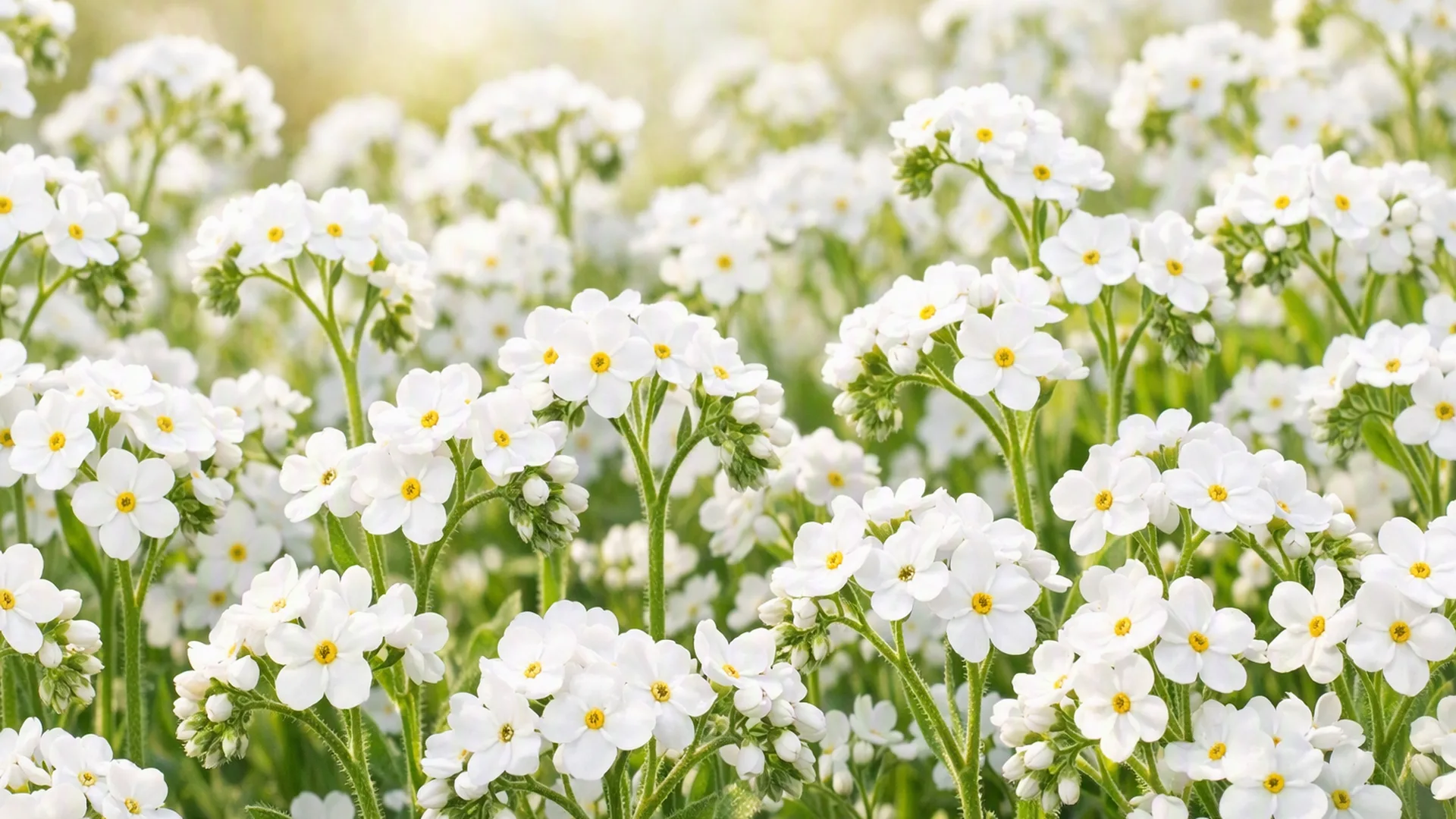
Forget-me-not white is an enchanting variety of the beloved forget-me-not (Myosotis) that, instead of the classic blue flowers, bears small, pure white blooms. This charming plant belongs to the rough-leaved plant family and is renowned for its softly hairy leaves and dense flower clusters that create beautiful carpets of white flowers in spring and early summer.
A Romantic and Symbolic Flower
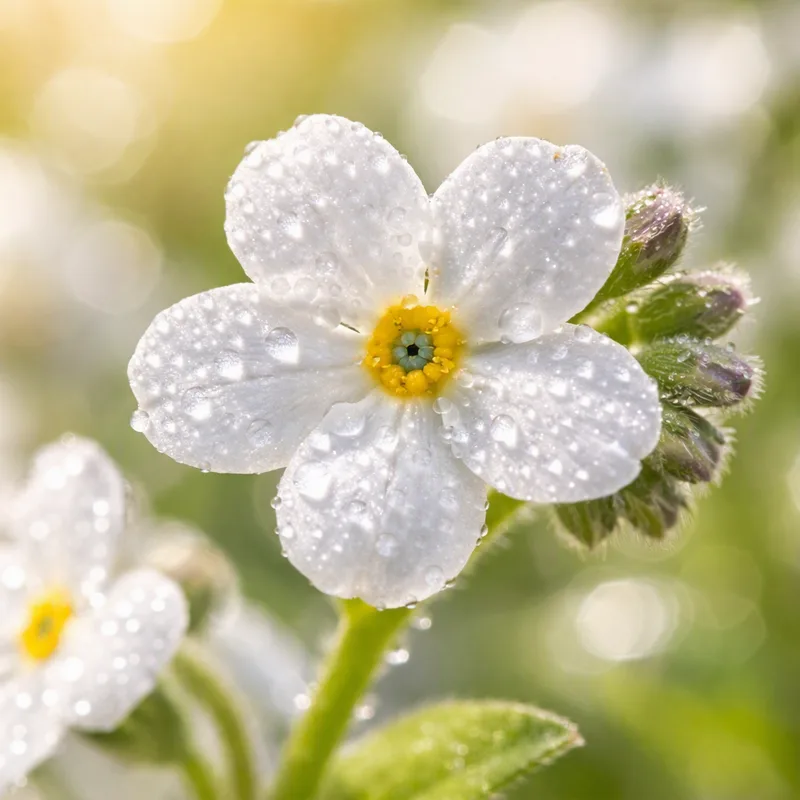
Throughout history, forget-me-nots have been a symbol of true love and remembrance, and the white variety reinforces this symbolism with its pure and innocent appearance. The small white flowers, which often feature a yellow centre, form dense clusters that brighten shady corners of the garden and create a dreamy atmosphere.
Plant Characteristics and Appearance
White forget-me-nots typically grow to a height of 15-30 centimetres and spread naturally. The leaves are softly hairy and oval to lance-shaped, whilst the small flowers are only a few millimetres in diameter but compensate with their abundant blooming. The flowering period extends from April to June, depending on climate and weather conditions.
Ideal Growing Location and Soil Requirements
White forget-me-nots thrive best in partial shade to shade and prefer moist, well-draining soil rich in humus. The plant is adaptable and can grow in most soil types, but performs best in slightly acidic to neutral soil. It is perfect for naturalistic gardens, woodland gardens and as ground cover beneath trees and shrubs.
Planting and Establishment
The best time to plant is in spring or early autumn. White forget-me-nots can be grown from seed sown directly in the planting location or by planting ready-grown plants. Seeds need light to germinate, so cover them only lightly with soil. Keep the soil evenly moist during the establishment period.
Care During the Growing Season
This low-maintenance plant requires minimal care once established. Regular watering during dry periods is important, particularly as the plant prefers moist soil. White forget-me-nots are excellent companions to other spring-flowering plants such as tulips, daffodils and pulmonaria.
Natural Regeneration and Spread
One of the most charming characteristics of white forget-me-nots is their ability to self-seed and create natural colonies. After flowering, small seeds develop and are dispersed by wind and water, resulting in new plants the following year. This makes them ideal for naturalistic plantings where you want a spontaneous and natural feel.
Overwintering and Perennial Growing
White forget-me-nots are typically biennial, meaning they form leaves in the first year and flower in the second year before dying. Thanks to their self-seeding ability, however, the population is maintained year after year. The plant is hardy and copes with Irish winters without difficulty, making it a reliable choice for permanent plantings.