
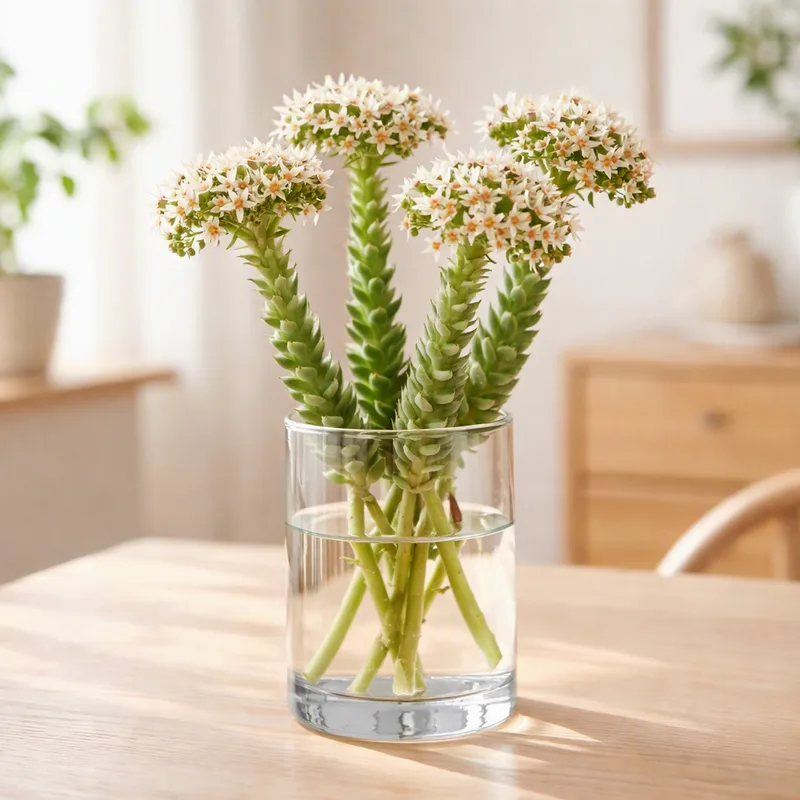


Houseleek White
Houseleek white, with the Latin name Sempervivum, is one of our most beloved succulents. This robust plant gets its name from its historical use as a roof covering, where it was planted on turf and grass roofs to prevent erosion. Today, houseleek white is a popular garden plant that is valued for its extreme hardiness and beautiful appearance.
A Master of Survival
Houseleek white is renowned for its fantastic ability to survive in difficult conditions. The plant can withstand both extreme cold and intense heat, making it perfect for our Irish climate. The thick, fleshy leaves store water and nutrients, allowing the plant to cope with long periods without watering.
Characteristic Features
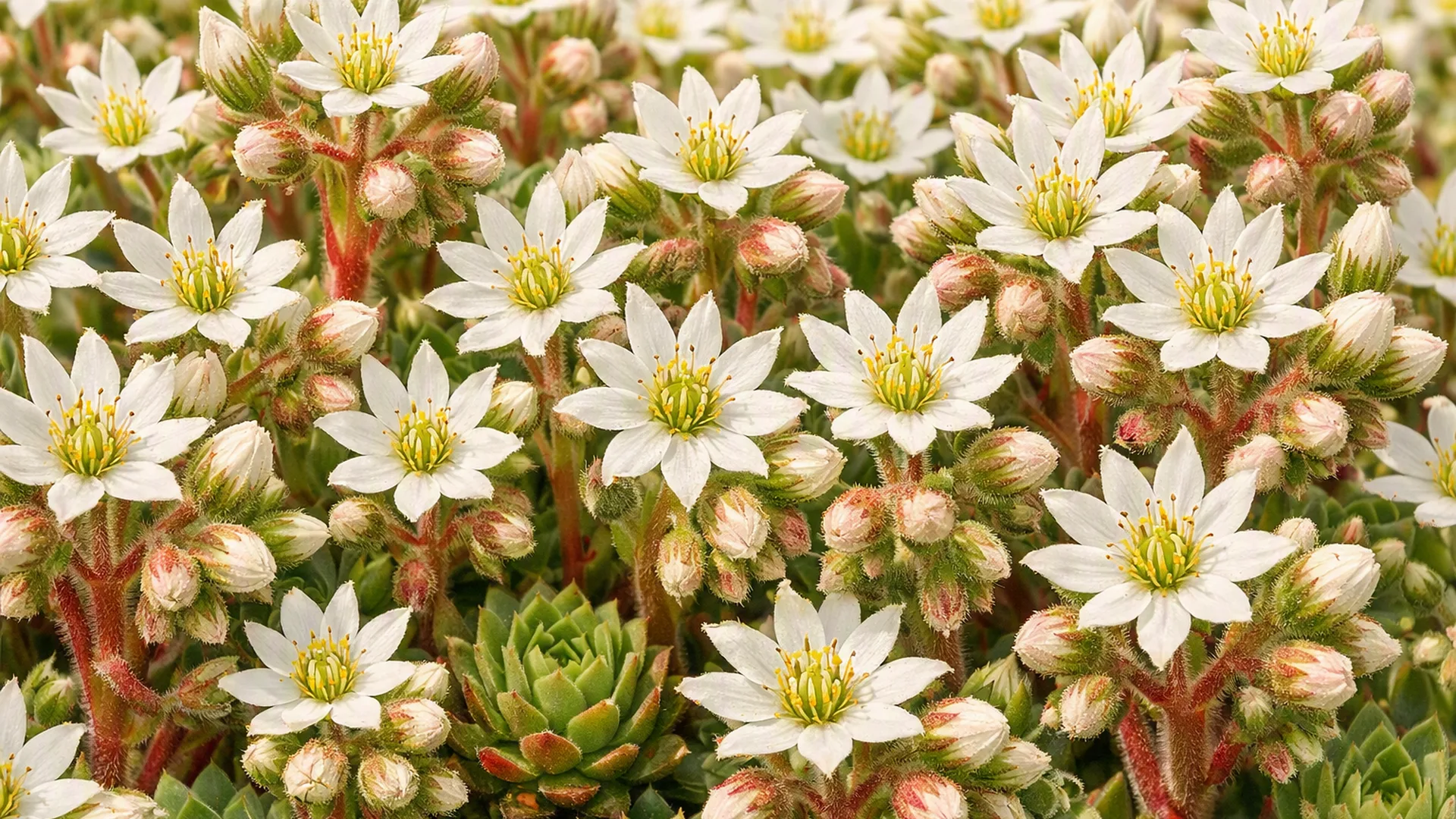
The white houseleek forms compact rosettes with silvery-green to whitish leaves that often have reddish edges. The rosettes can vary in size from a few centimetres up to around ten centimetres in diameter. In summer, the plant can surprise you with spectacular flower spikes that shoot up from the centre of the rosettes.
Perfect for Rock Gardens and Pots
Houseleek white is ideal for rock gardens, alpine gardens and dry flower beds. The plant thrives especially well in well-drained soil and sunny locations. It is also excellent as a pot plant on balconies and terraces, where it can stand outside all year round without protection.
Propagation and Spreading
One of the houseleek's most fascinating characteristics is its natural ability to reproduce. The mother plant produces small side shoots, known as "chicks", which grow around the main rosette. These can be easily separated and planted in new locations, making it simple to expand your collection.
Flowering and Life Cycle
When a houseleek rosette flowers, which usually happens after several years, it produces an impressive flower spike with small, star-shaped flowers. After flowering, the mother rosette dies, but the many side shoots continue to grow and ensure the plant's survival.
Care Throughout the Year
Houseleek white requires minimal care once it is established. The plant is practically maintenance-free and rarely needs watering or feeding. The greatest advantage of houseleek is that it actually does better if left alone than if given too much care.