

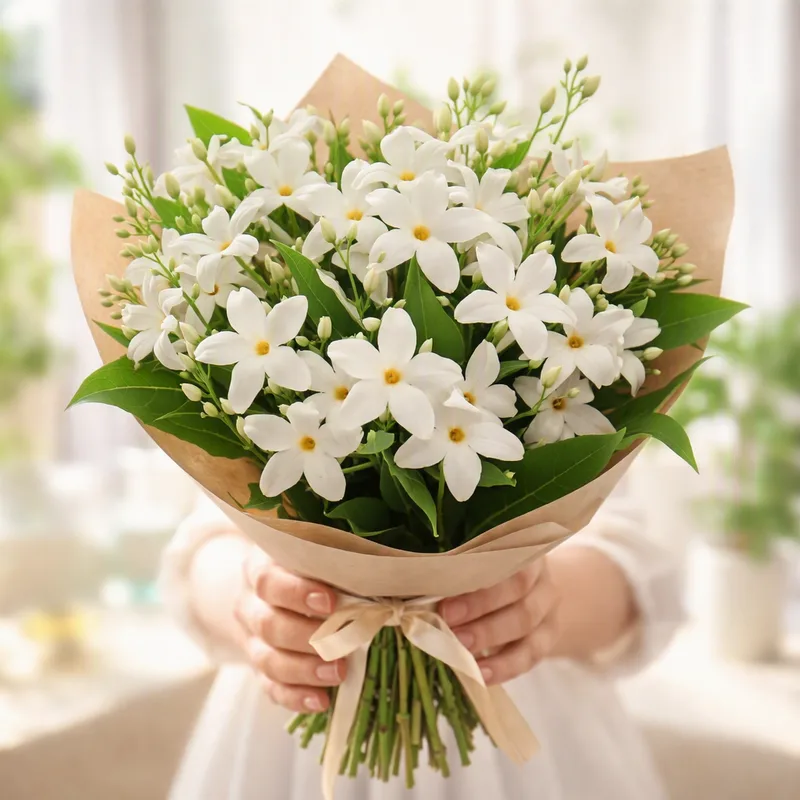

Classic Jasmine (Jasminum polyanthum)
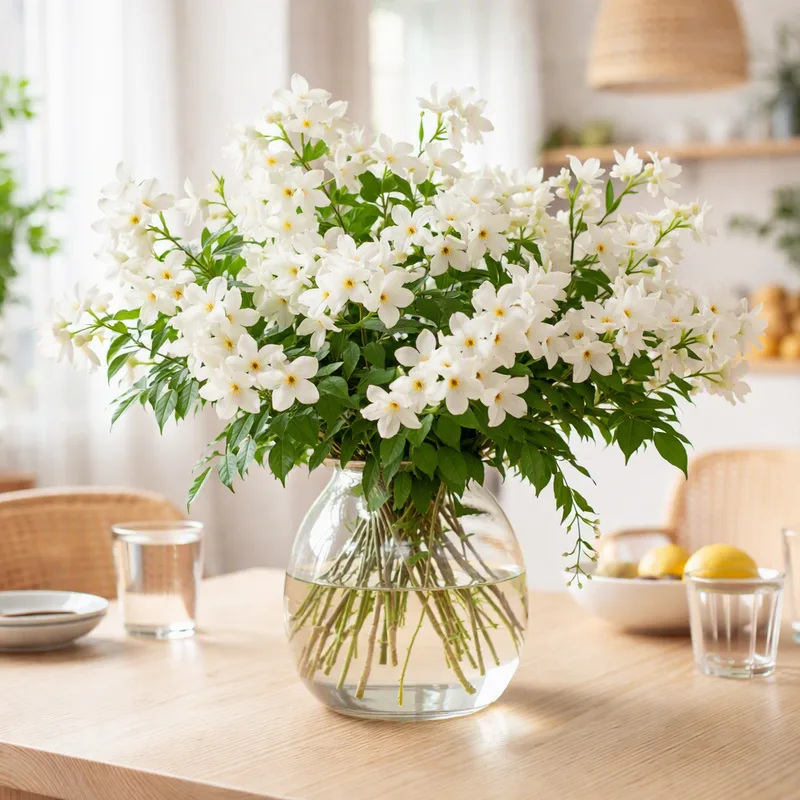
Classic jasmine (Jasminum polyanthum) is one of the most popular fragrant pot plants, loved for the sweet, heady scent of its flowers. Florists usually sell it as a potted climber wound around a hoop or trellis, and from late winter into spring it is covered in small, star-shaped white flowers that open from pink buds.
A Climber in a Pot
In a pot, classic jasmine stays compact and is easy to place on a windowsill, a side table or in a conservatory. Its twining stems can be trained back around the hoop as they grow, or given a larger trellis if you want the plant to spread. In summer it can go outside on a sheltered balcony or patio, but it must come back indoors before the first frost, as it is not frost-hardy.
Flowering and Fragrance That Enchant
The most characteristic feature of classic jasmine is its extraordinary scent. Flowering usually runs from about January to April, and a well-budded plant stays in bloom for several weeks. The fragrance is at its most intense in the evening, which makes jasmine a lovely plant for a living room or a hallway.
Light and Position
Give classic jasmine a bright spot without harsh midday sun, for example an east- or west-facing window. Too much heat shortens flowering, so avoid placing it right above a radiator. A slightly cooler room helps the flowers last longer.
Care During Flowering and Growth
Keep the soil evenly moist but never waterlogged, and empty any water left standing in the saucer. Feed with a liquid fertiliser every couple of weeks in spring and summer while the plant is growing. Mist the leaves occasionally if the air indoors is very dry.
Pruning After Flowering
Prune classic jasmine once flowering has finished. Cut back long shoots and remove weak or tangled stems, then wind the new growth around the support. Repot into a slightly larger pot with good-quality potting compost if the plant has outgrown its container.
Getting Jasmine to Flower Again
To bloom again, jasmine needs a cool period. In autumn and early winter, keep the plant in a bright, cool place at around 10-15 °C, such as an unheated room or a frost-free porch, and water a little less. This sets new flower buds, and once the buds show you can bring it back into the warmth to flower.
Common Problems and Solutions
Indoors, jasmine can occasionally be troubled by aphids, red spider mite or mealybugs, especially in warm, dry air. Check the undersides of the leaves regularly and treat early, for example with insecticidal soap. Dropping buds are usually a sign that the plant is too warm or the soil has dried out.